I invite you to come along with me on my quest for natural sources of both macro and micro-nutrients. Each of the sources quoted are worth reading in their entirety, but I'll present them as I search for the answers.
I have
taken to Earthan Beds which are dirt filled wicking beds connected to a bioponic or aquaponic system. Urine (humonia), weed tea, and compost supply much of my bioponic garden's needs. But one of the most difficult
minerals to supply during my experimentation with Soil-Less Bioponics and Aquaponics was iron (Fe2+) in an available form. For this one mineral I
may have to give in to purchasing a product. The following describes my pursuit, but first here are some interesting facts you should know
Common chelated forms (iron-EDDHA, DTPA and EDTA) differ in their
ability to hold onto the iron (and therefore keep iron soluble and
available to plants) as the media pH increases. Between a media pH of
4.0 to 5.5, any form of iron will work (including iron sulfate) at
supplying iron to the plant. However, as the media pH increases above
7.0, only the iron from Iron-EDDHA has high solubility. Research has
shown that the ranking of iron forms from most effective to least
effective at supplying iron at high media pH is Iron-EDDHA >
Iron-DTPA > Iron-EDTA > Iron sulfate. If iron is applied in a form
that is not soluble because of high media pH, then most of the nutrient
will not be available to plants until media pH is lowered. - http://www.greenhousegrower.com/uncategorized/understanding-plant-nutrition-fertilizers-and-micronutrients/
Now that we know what forms of iron are available how do we go about finding a natural source for our garden? It should be noted that iron, manganese, zinc and copper all require chelation in order to be available to your plants. Generally manganese, zinc and copper chelates are only found in the EDTA form, but Zinc sulfate is generally used because Zinc chelate is too expensive to use at rates needed to increase zinc levels in the soil.
"The worms digestive enzymes (or, properly, those produced by bacteria
in
the worms intestines) unlock many of the chemical bonds that otherwise
tie up loose materials and prevent their being plant available. Thus
vermicastings are as much as seven times richer in phosphate than soil
that
has not been through an earthworm. They have ten times the available
potash; five times the nitrogen; three times the
available magnesium; and they are one and one half times
higher than calcium (thanks the calcium carbonate added during
digestion).
All these nutrients bind into organic material in the fecal pellets." - .Teaming with Microbes: The Organic Gardener's Guide to the Soil Food Web, Revised Edition (2010) by Jeff Lowenfels & Wayne Lewis.
Sadly
iron is not mentioned as one of the micronutrients made available by
worms, but the benefits are obvious an even though Lowenfels and Lewis
did not specifically mention iron it may still be one of the benefits. The balance of evidence suggests that earthworms increase metal mobility
and availability but more studies are required to determine the precise
mechanism for this - http://www.sciencedirect.com/science/article/pii/S0269749109000979
Iron plays an important role in enzyme functions and is a catalyst for
synthesis of chlorophyll. Plants deficient in Fe may exhibit pale leaves
and/or yellowing of leaves and veins. Nickel has only recently been recognized as an essential element. It is
required for the urease enzyme to break down urea into usable nitrogen
and for iron absorption. - http://www.aglearn.net/isfmMod2.html
Clearly it's not just iron we need but instead a full spectrum of nutrients, and worms provide many of these. Also note that most macronutrients are mobile within the plant, most micronutrients are
immobile, and so a constant supply is needed for the duration of the
crop. A healthy soil web with worms is crucial to maintaining the constant availability of these nutrients.
If your soil is lacking in certain elements, the best way to add them is
through the compost pile. Add colloidal phosphate (organics) or superphosphate
for phosphorus and wood ashes for potash. Composted organic materials can
also be used as a cheap iron chelate (a slow-release source of iron) to
remedy the adversities of iron chlorosis, i.e., yellowing plants. Gardeners
can make a "synthetic chelate" in their compost pile by mixing
1 cup of iron sulfate (copperas) for each bushel of moist compost. Particles
of iron will adhere to the surface of the compost material and will be released
for plant use as the material decomposes while it is being used as a mulch
around plants or when incorporated into the soil. - http://aggie-horticulture.tamu.edu/archives/parsons/earthkind/ekgarden11.html
This gives me some hope
of finding a practical method of creating available iron. Iron sulfate
is readily available and inexpensive, but my quest for natural and available sources has not been
satisfied. Some plant material high in iron include artichokes, spinach, collard greens, lentils, mushrooms, and soybeans, so compost these whenever possible.
I don't throw many nuts away, but they contain a lot of iron. Some common nuts such as pine nuts, hazelnuts, peanuts, almonds, pistachios, and macadamia contain about 0.061%
Beans are also a good source - soybeans, lentils, kidney beans, garbanzo beans, and lima beans, navy, black beans , pinto,, and black-eyed peas contain about 0.037%
How did our ancestors garden without store bought soil amendments? Were they just lucky to be the first to plant in the nutrient rich soil before it was depleted? The natural production and distribution of iron is a
process of volcanic action where sulfur and iron are spewed forth along with many other micro
nutrients into the jet stream and ocean currents. The ocean contains most of earths natural minerals which are spread out by strong air and water currents.
Kelp contains enzymes, a lot of potassium, and many other minerals essential for plant growth, making it a perfect garden supplement with about 22% iron. I'll admit I don't know if that 22% is in an available chelated form. Kelp also contains cytokinin which promotes resistance to bugs, and allows for faster cell division. You may recall that one of the benefits of insect frass is cytokinin, but I do not wish to diverse.
Kelp Forests
I am not lucky enough to live near an ocean, but kelp is a natural product with many benefits. As much as I would like to curtail my dependence upon commercial products it may be that some products such as iron sulfate or kelp will have to be purchased in order to achieve outstanding results. Azomite, BT, and Spinosad are a few others I have come to rely upon, but my quest for independence will continue.
It seems that ferric iron is generally present,
so the better solution might be to simply make it
available as ferrous iron by adding plenty of organic acids in the form
of humus. Many of the components of humus are heterogenous, relatively large stable organic complexes. They function to give the soil structure, porosity, water holding capacity, cation and anion exchange, and are involved in the chelation of mineral elements. - http://www.humates.com/pdf/ORGANICMATTERPettit.pdf
A plant-excreted chelate forms a metal complex (i.e., a coordination compound) with a micronutrient ion in soil solution and approaches a root hair. In turn, the chelated micronutrient near the root hair releases the nutrient to the root hair. The chelate is then free and becomes ready to complex with another micronutrient ion in the adjacent soil solution, restarting the cycle. The process works like this: A chelate is exuded from a root to the soil solution. The chelate complexes a micronutrient (e.g., iron) from the soil solution. The chelated micronutrient is carried to a root hair, where it is released. The chelate goes back to the soil solution and starts another cycle. - http://edis.ifas.ufl.edu/hs1208
Humic acid, humate and folic acids are mined, and sold, but what if compost can provide the same benefit. It is known that Earthworms (Eisenia foetida) produce several bioactive humic substances which are found in earthworm compost.
The chelating action of humic acid is sometimes used to produce chelated iron products. Without the addition of a nutrient such as iron, the claim is often made that humic acid has the ability to solubilize micronutrients already in the soil. This is a valid claim,but one has to realize that turfgras roots themselves excrete organic compounds that solubilize micronutrients. - http://aggie-horticulture.tamu.edu/newsletters/hortupdate/hortupdate_archives/2002/jun02/art4jun.html.
I may be reading too much into this but I think I've found the answer to my my quest for natural sources of chelated iron - Earthworms (Eisenia foetida).
Along with the bioactive humic substances which produce chelated iron; earthworm's and their compost also provide enzymes, that promote hormonal activity, and make chemical reactions millions of times faster. Microbes make organic plant food from minerals and dead stuff with the enzymes they produce.
Weed
Tea / Fertilizer Gather
some herbs from the list below and put in a large container such as a
bucket or barrel. Fill with water. Infuse for at least two weeks.
This is best to prepare with the new moon and strain and fertilize
around the full moon, although it can be done whenever it is
convenient. Nitrogen:
Willow Tea: Used
for rooting transplants or cuttings. Infuse leaves from a willow tree
in water as if you were making an herbal tea for yourself. Once
cooled, water the plants that you wish to root with this mixture.
This video shows the construction of my Earthan Beds using an extremely quiet 8 Watt General Hydroponic Air Pump, and four individual air lift pumps. Watering from below the dirt provides the perfect moisture with very little evaporation, and makes gardening easy. The beds will remain moist for a long time even if you are away and the sump tank runs out of water.
The economy and dependability of the air lift pumps combined with recirculating water are so appropriate during this era of water, mineral, and energy shortages.
Earthan Beds provide the advantages of bioponics or aquaponics with real dirt where the soil web is allowed to flourish.
Nutrients can be supplied by eco-friendly methods such as urine or weed teas. 5% of the natural gas we suck from the earth goes into making fertilizers. Phosphorous is becoming harder to come by and some estimate our reserves will be exhausted within 50 years. Urine contains amply amounts of nitrogen, phosphorous and many other trace minerals. Less than a century ago none of the nitrogen was supplied by petroleum. Instead microbes made nitrogen available to our plants. The aerated water circulating through rocks you see in these beds provide the perfect environment for nitrification.
Return to natural resources. Grow your soil and your plants will take care of themselves,
Figuring out
nutrient imbalance is in my opinion the most difficult thing about
aquaponics. Nate really lays it out in an easy to understand method for
us to determine a course of action when our plants begin to look a bit
peeked. I would post the link to the KEY he has developed for
diagnosing these problems right here, but I feel that you should go to
Nate's site and find his offer. When asked to register just do it.
You will be pleasantly surprised.
Indigenous Microorganisms and Effective Microorganisms are used in Korean gardening methods where bacteria is fermented and grown, along with other beneficial organisms for the benefit of the garden's soil web and to stimulate the plants natural defenses.
My reason for culturing the microorganisms found in frass is to create suppressive isolates; then colonize the rhizosphere with nonspecific fungal antagonists and initiate a systemic acquired resistance (SAR) to fortify the plant's defenses by triggering a hypersensitive response. I will also attempt to artificially trigger SAR by spraying this homemade plant activator on the foliage in hope of growing plants highly resistant to a broad range of pathogens.
The video above shows the first step of my IMO Frass experiment.
I will include more videos as I progress
I attempted to find other studies involving frass. The research papers
Bryan McGrath created the series above. I have summarized his method below.
IMO 1 - Start local indigenous micro organisms on hard
cooked rice. Cover with inoculate such as grass,
bamboo or leaves.
IMO 2 - Mix 50/50 by weight with brown
sugar.
IMO 3 - Mix with wheat bran and
flour. Mix 3 parts water
to 1 part IMO 2. Combine this with 12
lb wheat bran and 1 cup flour till moist
but not soaked. Let compost till cool and clumped
with mycillium.
IMO 4 - Mix with
soil or bakashi compost. 1:1
ratio.
Another source of information comes from SQWworm Sosiety Bryan McGrath is also featured in on this site but the methods are slightly different
INSECT CHITIN–Chitin stimulates the plant’s auto-immune system to create plant secondary metabolites(PSMsor“exudates”)such asChitinase Enzyme,Terpenes, Flavinoids,Alkaloids and Amino Acids,which protect plantsfrom Pests and Pathogens–The absolute best Fungal Food for Compost Teas–Works exceptionally well with Mycorrhizae–Prevents/Kills Root Rot (fungal pathogens in the rhizosphere)–Kills Root-Feeding Nematodes and their eggs
Chitinases are enzymes that catalyze the degradation of
chitin
Chitin stimulates the plant's auto-immune system to create plant
secondary metabolite s (PSM s or “exudates ”) such as Chitinase
Enzyme, Terpenes, Flavinoids, Alkaloids and Amino Acids, which
protect plants from Pests and Pathogens
Plants often wait until pathogens are detected before producing
toxic chemicals or defense-related proteins because of the high
energy costs and nutrient requirements associated with their
production and maintenance. This phenomenon is called systemic
acquired resistance (SAR) and represents a heightened state of
readiness in which plant resources are mobilized in case of
further attack. Researchers have learned to artificially trigger
SAR by spraying plants with chemicals called plant activators.
These substances are gaining favor in the agricultural community
because they are much less toxic to humans and wildlife than
fungicides or antibiotics, and their protective effects can last
much longer. - An
Overview of Plant Defenses against Pathogens and Herbivores
My frass experiment uses the IMO method, but Effective Microorganisms are very similar. Below are written instructions
Making Effective
Microorganisms
from Scratch.
Mix one cup rice with two cups water and shake. Strain out the rice. Cover and secure a paper towel over the top of the jar. Leave in the dark, between 68 and 77 degrees F for five to seven days to culture the active microbes. The mixture should smell sour. Add 10 parts milk (about 5 quarts) to the one part strained rice wash, and let it ferment for 14 days. The rice wash grows many microbes, both beneficial and pathogenic. The milk kills off everything but the lactobacillus. Strain the solids off the top of the bucket. The yellow liquid is purified lactobacillus serum. Dilute the lactobacillus serum in a 1:20 ratio with water and add it to your compost
Mulch provides natures protection similar to our skin. Mulch slows evaporation, allowing
the soil surface to remain moist, and inviting for the organisms working 24/7 to improve your garden soil.
Mulch can be straw, wood chips, or a cover crop of legumes such as clover, beans or vetch. One method of mulching which saves work is to pull weeds, and lay them back on the ground.
As mulch is broken down by organisms; the nutrients held within are taken down into your soil. You may occasionally hear that the mulch will rob the soil of nitrogen. This would be true if the mulch were mixed into the soil, but that is not what's happening with mulch. It lays on top and adds nitrogen as it decomposes, and returns to it's basic elements. Some mulches will provide a better carbon to nitrogen ratio than others.
Even materials such as recycled pallets with a C:N ratio of 125:1 and decorative barks are better than nothing, but they provide far less nitrogen and more carbon.
Materials such as composted manure 12:1, and composted yard waste 17:1 are best. Composting will kill weed seeds if left in a hot pile (131-140°F) at least one week. Also keep in mind that some organic materials contain elements which can
inhibit the growth of your garden. For example rhubarb leaves contain
oxalic acid which lowers pH and inhibits microbial activity.
Composted wood chips 40:1, fallen leaves 55:1, pine needles 64:1, and fresh wood chips with foliage 65:1 are not quit as high in nitrogen, but are beneficial because they shade the soil, retain moisture and promote the health of the "soil web". Adding a second source of nitrogen such as blood meal,
manure, or coffee grounds can be beneficial when high C:N mulches are used. But be very careful with fertilizers such as ammonium nitrate, or urea as these are extremely strong, and can kill your helpful microorganisms. For a more complete list visit this site from the University of Illinois .
I've been told the Kratky Method is also good for fast growing
vegetables like tomatoes. It's not the right time of year to be growing
leafy greens, but I have some heat tolerant varieties that I'm
experimenting with in the shade.
The Kratky Method appeals to me because it is so
easy. The
hydroponic system requires mixing solution on a regular basis, and AP
requires monitoring. Once filled and planted there is nothing else to do with the Kratky Method. As the solution is used the root grow down a bit further.
The initial solution for this 16-15-32 solution in a 200 litter tank is created by mixing
104 grams Masterblend 4-18-38, 104 grams Ca(NO3)2, and 52 grams MgSo4 in 200 liters of water.
I did not think the Kratky Method would be well suited to tomatoes, but someone left a comment assuring me they also grow well. I'm growing tomatoes in a 50 gallon hydroponic Dutch Bucket system with a 20-18-38 solution created by mixing
132 grams Masterblend 4-18-38, 132 grams Ca(NO3)2, and 66 grams MgSo4 in 55 gallons of water.
Next summer I may try tomatoes in the Kratky bed.
The units are marked in liters on the Kratky tank and my hydroponic reservoir is marked in gallons so each of the above formulas are stated differently. The lettuce formula is not as strong as the solution mixed for tomatoes.
After 34 days, I have decided to begin posting the results of this experiment. Below are photos of the experiment taken every few days. This experiment was done in the hottest part of summer. Temperatures reached 111 degrees in the shade where these plants were grown.
It's been a week since I added Epson Salts. While I don't see
significant growth the Epson salts have brought vibrant deep green color
to the leaves.
These plants may be a lost cause since they were stunted so young, but I'll continue to observe their recovery.
I
am experimenting with 8 different methods of growing. AP, Bioponics,
Bio-Char, Hugelkuture, dirt, Wicking Beds, Hydroponics, and
Kratky Method. The tomatoes from the wicking beds, hugelkulture, hydroponic and wicking bed
systems taste very good. Given the problems I've recently encountered
with my bioponic system it's not fair to judge the taste from that
system.
Of all the methods I
have come to like wicking beds the best. Water levels must be
maintained, but the reservoir allows one to be less attentive and if the
soil web is good the plants take care of themselves..
I have several experiments that I want to do with my new microscope. I'm a novice with the microscope so I may make some mistakes. I did not know that I needed microscope slips, so these first videos are a little blurry.
Growth is slow at first, but within minutes the organisms find food, and begin to multiply. This video takes us from the first few minutes after I added molasses and water to 21 hours later. Eventually the food will be used up, and toxic waste will build up. The organisms will die if left in this solution, so it's important to use the tea while they are thriving.
Using a piece of acetate for a cover slip I examine the sample of compost tea I took five hours earlier. The slip makes this video clearer than the one I took this morning. Even though there was no aeration this jar of tea has continued to grow more microorganisms.
This next video is about 30 hours into the brew. I wanted to determine if Neem Flour (a botanical insecticide) will kill beneficial microorganisms and to see what progress they have made since the brew began. I had previously looked at a sample with no neem flour and it looked the same as this sample so I saw no reason to show both..
Neem flour is said to kill non-beneficial nematodes and anthropoids. My conclusion is that it does not kill many of the microorganisms, I lack the skill to determine if beneficial or non-beneficial nematodes and anthropoids were killed,but I feel confident that neem flour does not kill all of the microorganisms.
For more information about neem I found these sites to be helpful.
http://www.neemfoundation.org/neem-articles/neem-in-organic-farming/pest-management.html
and
http://www.infonet-biovision.org/default/ct/229/recipesForOrganicPesticides
I will continue to monitor the microorganisms, and I will post an update for the second part of this experiment which is to determine when the tea begins to get too old to use. I may also experiment with dilutions and additional molasses to see how long tea can be kept viable.
To eliminate the possibility of anaerobic bacterial I will conduct this experiment again after I get my cover slips, but I will aerate the samples over night rather than simply leave the jars open. It's unclear to me at this point whether or not the increased microorganisms is due to anaerobic organisms which may be less beneficial to plants.
I've recently read a couple articles about nutrients I'd like to share with you.
This first site is Clemson University. A research university located in Clemson, South Carolina.
This university site is full of interesting research. Go to http://www.clemson.edu/search/index.htm and enter words like 'micronutrient' or DTPA for information you are looking for.
Another paper at Clemson University describes the process by which DTPA is extracted for micronutrients DTPA Extraction for Micronutrients
I don't know whatICP stands for, but I think it might be (inductively coupled plasma)
I wondered where one would find the chemicals and found Chemical Reagent.com
Nate Storie has been making a series of videos. This link is about understanding iron in aquaponics. While you may not be growing with aquaponics the topic is informative for soil gardeners as well
Nate does not get real technical in his presentation which is probably good because the chemistry is a bit difficult, but you may run across some different forms of iron and want to know what the abbreviations stand for.
DTPA is Diethylenetriaminepentaacetic acid
EDDHA is ethylenediamine-di(o-hydroxyphenylacetiz) acid
EDTA is Ethylenediaminetetraacetic acid
Basically the first two are what you want. EDDHA is best for pH over 7, but it's more expensive.
A tall growing, non heading member of the cabbage family, tree collards
were introduced to California, probably during the latter half of the
eighteenth century. They are nutritious and a 100 square foot bed can
provide four times more protein and eight times more calcium than the
milk produced from a fodder crop grown in the same area. In addition,
tree collards contain no oxalic acid; therefore, they may be eaten raw
without iron being tied up. Perennial Purple Tree Collard leaves are
rich in calcium (226 mg per cup, cooked), vitamins B1, B2, B9, and C
(which may be leached by cooking, however), as well as beta-carotene
(pro-vitamin A). Read more: http://richardsfarms.vpweb.com/Tree-Collard-Information.html Fooled You is a hybrid (F-1) variety of jalapeno with virtually no heat.
They have the flavor and appearance of jalapenos, but you can munch them like bell peppers. They are typically just a bit larger than regular jalapenos at about 3 ¼ inches long and 1 inch wide. The fruit is heavy, thick-walled, and will turn from green to red if allowed to mature on the plant. The plant will grow to just over 2 feet tall and many seed companies boast large yields in about 65 days. Read more: http://davesgarden.com/guides/articles/view/1353/#ixzz2RhzxxjRB Mouse Mellon
Tiny, 1 x 1/2 in. light-green fruits with darker mottling look like
watermelons for a doll house. The flesh is white, crisp, crunchy with a
slight lemony tartness. The flavor is closer to a cucumber than a melon.
One person described them as,"Cucumber with a bit of watermelon rind
and a squeeze of lemon juice." It is said that the missing crunch can
make people go off diets.
Read more: http://store.underwoodgardens.com/Cucamelon-_-Mouse-Melon-Melothria-scabra/productinfo/V1041/ Lemon Cucumber
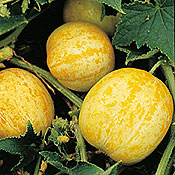
Yellow-colored, spherical, the dimensions of an ample fist. Yep, these
types of cucumbers appear like lemons (significantly, that’s a image of
cucumbers, lemon cucumbers, not really lemons). These are sweet, without
having that nasty side that a majority of cucumbers have got, thin
skins, minimum gentle seeds, as well as tasty. They’re delicious raw,
however create tasty pickles as well. Read more: http://whiteonricecouple.com/recipes/lemon-cucumbers-with-pesto/ Strawberry Spinach
One of the more interesting plants we grow, or should I say, grows
itself is strawberry spinach, also called strawberry blite, beet berry,
Indian paint, and a number of other names. The plant is very cold hardy
but will thrive in the hottest weather. With a long taproot it can get
by on very little water, of course the more water it gets the larger the
fruit.
The typical Physalis fruit is similar to a firm tomato (in texture), and like strawberries or other fruit in flavor; they have a mild, refreshing acidity.
Because the plant itself is covered with thorns, it is sometimes used
as a hedge plant to discourage animals from wandering into vegetable
gardens — not a bad idea.
The fruits ripen dark red and are round
and somewhat bullet-shaped, tapering to a blunt point. The interior
flesh is yellow and full of tiny flat seeds that are arranged much the
same way as seeds in a cherry tomato. Thus, when eaten out of hand, the
raw fruit has the mouth feeling of raspberries. The actual flavor is
tart and refreshing, quite similar to a sour cherry, for which it can be
used as a relatively good substitute in pies.
Moringa, native to parts of Africa and Asia, is the sole genus in the flowering plant family Moringaceae.
The most widely cultivated species is Moringa oleifera, a multipurpose tree native to the foothills of the Himalayas in northwestern India and cultivated throughout the tropics. M. stenopetala, an African species, is also widely grown, but to a much lesser extent than M. oleifera.
Moringa grows quickly in many types of environments.
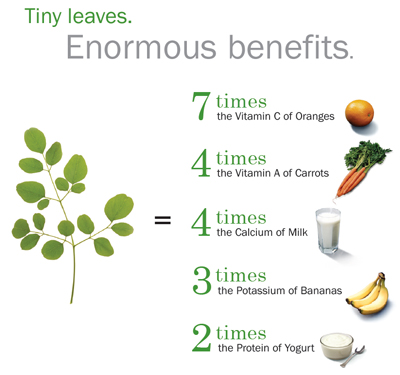
Much of the plant is edible by humans or by farm animals. The leaves are rich in protein, vitamin A, vitamin B, vitamin C and minerals
Do you have more that you would like me to add to this list?
This is really interesting stuff! Most of what I have written was
learned from reading Teaming with Microbes by Lowenfels & Lewis. It
began as notes I was taking as I read the book. I think the book is a
masterpiece.
<<<==================>>>
The Soil Web
Plants secrete chemicals made of
proteins and carbohydrates, called exudate through their
roots.
The dark spots are bacteria. The less defined areas are the excudates emanating from the root on the right
Rhizoshere
The excudates are soluble sugars, amino acids and other compounds secreted by roots. They attract specific beneficial bacteria and fungi
in the rhizoshere which looks like jam under a microscope.
Bacteria, fungi, nematodes, and protozoa and even some larger
organisms compete for the excudates, water, and minerals within
the rhizoshere.
Nutrients which would otherwise wash out of the soil are
retained by these organisms which cling to the rhizoshere. .
Both good, and bad bacteria compete for the excudates, but if
the soil is healthy good organisms such as fungi that produce
inhibitory compounds such as penicillin and streptomycin
prevent disease from entering the plant. Also Mycorrhizal
fungi will be present to protect the roots, and deliver water,
phosphorus, and other nutrients.
Nitrogen is a basic building block of amino acids.
In general perennial trees and shrubs prefer fungal dominated
soil while annuals, grasses and vegetables prefer bacteria
based soils.
The key is to encourage the type of soil (fugal or bacteria)
to thrive so that the plants get the type of nitrogen they
they prefer.
It has become common practice to add "-icides" which are an
irritant to the worms. These poisons kill, or drive the worms away. On top of that, the common practice of adding salt based chemical fertilizers
rather than replacing organic material deprive the worms of
food, and tilling crushes, and kills any worms and arthropods
that might remain. The soil now lacks life, and becomes
compacted. Water no longer brings oxygen down into the soil,
and pathogens establish themselves.
Healthy soil will contain between 20 to 30 thousand different
species in just one teaspoon of good soil. Each group must be
kept in balance. Nature does a good job of this but
agricultural chemicals can kill off entire groups and decimate
the balance, which in turn removes food supplies for other
groups.
Jeff Lowenfels Soil Food Web Lecture
Letters are used to describe the soil layers The 'O' layer lies above the 'A'
layer. Several other horizons
lie below until bedrock is reached, but 'O and 'A' are the only two
layers gardeners are concerned with. . The 'O' horizon is
broken down further into 'Oi', 'Oe' and 'Oa' depending on the condition of decomposition the organic mater is in . The specific plant
source of organic material can still be identified in 'Oi' . In
'Oe' the organic material can only be identified as plant, and
finally 'Oa' has decomposed so much that identification is not
possible.
The roots grow in the rich humus of the A layer which is full
of organic matter, and biological activity which has leached
down into it from the 'O' layer above. It's important that
these layers have a good mixture of air, water, minerals and
organic matter. Humus or humified organic matter is complex organic compounds that remain after many
organisms have used and transformed the original material. Humus is not readily
decomposed because it is either physically protected inside of aggregates or
chemically too complex to be used by most organisms. Humus is important in
binding tiny soil aggregates, and improves water and nutrient holding capacity.
Minerals can influence the color of soil. Red
and yellowish tints are an indication of iron, purple - black
indicates manganese. Gray can indicate a lack of organic
matter, and an anaerobic condition due to the microbes having
converted the iron to Fe2+. Organic matter
produces much stronger coloring agents as it decomposes, but in an anaerobic soil it can also provide food for anaerobic bacteria that reduce iron
and manganese. Therefore gardeners are looking for dark soils the color of
coffee.
There are three categories of soil texture: The categories are
a description of how the particles sizes feel to your touch,
not the actual mater. Sand which is gritty, silt which is
like flour and clay is slippery. An ideal garden soil texture
will have all three in approximately equal amounts. This is
called loam. Loam has the ability to drain and draw air down
into the soil like sand while holding water and nutrients like
clay and silt.
An ideal ratio would be about 30 to 50% sand, 30 to 50%
silt, 20 to 30% clay and 5 to 10% organic material. You can
easily test you own soil by adding a tablespoon of water
softener to 2 cups of water and a sample of your soil. Shake
and let stand for 24 hours then compare the stratification.
Sand will settle to the bottom, silt will form the next layer
and then clay will finally settle leaving the organic mater to
float for a while at the top. With this knowledge you will be
able to adjust your soil as required.
Nematodes
may be useful indicators of soil quality because of their tremendous diversity
and their participation in many functions at different levels of the soil food
web. Several researchers have proposed approaches to assessing the status of
soil quality by counting the number of nematodes in different families or
trophic groups.* In addition to their diversity, nematodes may be useful
indicators because their populations are relatively stable in response to
changes in moisture and temperature (in contrast to bacteria), yet nematode
populations respond to land management changes in predictable ways. Because they
are quite small and live in water films, changes in nematode populations reflect
changes in soil microenvironments.
Nematodes
Polysaccharides produced by worms, fungus, and bacteria stick
the aggregates of the soil together, and make it easier for
the soil to hold capillary water and soluble nutrients. This
is the type of soil that will support soil biology, giving it
the ability to withstand floods, drought, freezing and animal
traffic.
Small particles of clay and humus carry positive electrical
charges call ions. Positive ions are called cations and
negative charges are called anions. The positive ion (cations) - pronounced as 'CAT Ion'
of humus and clay attract the negative ions (anions) of
calcium (Ca++), potassium (K+), sodium (Na+), magnesium
(mg++), iron (Fe+), ammonium (NH4+), and hydrogen (H+) so strongly that very little remains in solution. The nutrients are held in clay and humus where roots exchange (H+) cation for a nutrient cation.
There are also anions of chloride (Cl-), nitrate (NO3-),
sulfate (SO4-) and phosphate (PO4-) in the soil as well.
Since these are repelled by the humus and clay cations they
are easily leached away.
Plant root hairs also have cations which are exchanged for the
cations in the clay and humus. The root hairs exchange one
(H+) for every nutrient cation absorbed. This occurs at the
cation exchange site. The Cation Exchange Capacity (CEC) is a
measurement of how many exchange sites there are in the soil.
Higher CEC measurements indicate that the soil can store large
amounts of nutrients, which is why gardeners like a high
CEC. But the clay and humus which give the soil this quality
also prevents good drainage and aeration so a mixture with
good soil texture is important.
Each cation exchange, as well as some fungal and bacterial
exchanges effect the pH of the soil. Knowing the pH is
important because different microbes prefer different soil pH
and depending on the plant certain microbes may be required
for nutrient exchange.
Bacteria come in two basic types. Anaerobic which lives
without oxygen and produces offensive odors, and aerobic which
lives with oxygen and produces pleasant fresh odors. Bacteria
are responsible for recycling carbon, sulfur, and nitrogen.
CO2 is a by product of aerobic bacteria, and sulfur is
recycled by anaerobic bacteria.
Soil nutrients occur in two forms: inorganic compounds dissolved in water or attached to minerals and organic compounds part of living organisms and dead organic mater. Bacteria, fungi, nematodes, and arthropods are always transforming nutrients between these two forms. When they consume inorganic compounds to construct cells, enzymes, and other organic compounds needed to grow, they are said to be "immobilizing" nutrients. When organisms excrete inorganic waste compounds, they are said to be :mineralizing" nutrients.
Free-living nematodes can be divided into four broad
groups based on their diet.
Bacterial-feeders
consume bacteria.
Fungal-feeders feed
by puncturing the cell wall of fungi and sucking out the internal contents.
Predatory
nematodes eat all types of nematodes and protozoa. They eat smaller
organisms whole, or attach themselves to the cuticle of larger nematodes,
scraping away until the prey’s internal body parts can be extracted.
Omnivores
eat a variety of organisms or may have a different diet at each life stage. Root-feeders
are plant parasites, and thus are not free-living in the soil.[1]
Nitrogen found in the atmosphere can not
be used directly by plants. It must be 'fixed' through a
process called nitrification where aerobic bacteria combine
nitrogen with either oxygen or hydrogen to form nitrite
(NO2-), and eventually nitrate (NO3-) ions from the ammonium
(NH4+) waste of protozoa, and nematodes which consume other
bacteria and fungi. [1] This is an example of mineralization.
Nitrification produces an acidic pH. When oxidation occurs, an electron is lost, releasing energy
that is used by the bacteria. Nitrifying bacteria do not
generally like low pH, but fortunately other bacteria called
denitrifying bacteria convert nitrogen salts created by the
nitrification process back into nitrogen N2 which returns to
the atmosphere. The roots take up negatively charged anions (H+) exchanging hydroxy (OH-)
anions. This also helps to return the pH to a higher level.
Hydrogen is the root's currency. They sell OH- for H+, and then exchange H+ for nutrient cations. Even microorganisms carry their own charges, and are also influenced by the anions an cations of the roots and soil.
Bacteria
fall into four functional groups. Most are decomposers
that consume simple carbon compounds, such as root exudates and fresh plant
litter. By this process, bacteria convert energy in soil organic matter into
forms useful to the rest of the organisms in the soil food web. A number of
decomposers can break down pesticides and pollutants in soil. Decomposers are
especially important in immobilizing, or retaining, nutrients in their cells,
thus preventing the loss of nutrients, such as nitrogen, from the rooting zone.[1]
A
second group of bacteria are the mutualists
that form partnerships with plants. The most well-known of these are the
nitrogen-fixing bacteria. The third group of bacteria is the pathogens.
Bacterial pathogens include Xymomonas
and Erwinia species, and species of Agrobacterium
that cause gall formation in plants. A fourth group, called lithotrophs or
chemoautotrophs, obtains its energy from compounds of nitrogen,
sulfur, iron or hydrogen instead of from carbon compounds. Some of these species
are important to nitrogen cycling and degradation of pollutants.[1]
Bacteria live in a matrix of sugars, proteins, and DNA called
Bio-film or Bacteria Slime which helps sustain them through
drought and attack from antibodies and other bacteria.
Bacteria prefer the vicinity of root hairs because of the
available food from the excudates. The nutrients within the
bacteria are unavailable to the plants until the bacteria die
and so goes the cycle. Bacteria feed on the excudates in the
root zone, absorbing nutrients which will be later be made
available to the plants when they die. There are also
Mutualistic Bacteria which live on the root nodules of peas
and beans. These bacteria trade amino acids containing
nitrogen for carbohydrates without the need for the bacteria
to die.
Pathogenic bacteria often produce toxic alcohols if the soil
has poor texture and drainage. They can cause citrus canker,
diseases of potatoes, melons and cucumbers and fire-blight of
pears, and apples, galls and tumors, root rot on onion, leaf
curl and black spot on tomatoes, but beneficial bacteria
compete strongly for food and starve out pathogenic bacteria.
By keeping your soil alive you can avoid these problems, but
intervening with "-icides" will kill the good bacteria as
well, leaving you with dead soil.
Certain strains of the soil bacteria Pseudomonas
fluorescens have anti-fungal activity that inhibits some plant pathogens. P.
fluorescens and other Pseudomonas
and Xanthomonas species can increase plant growth in several ways. They
may produce a compound that inhibits the growth of pathogens or reduces invasion
of the plant by a pathogen. They may also produce compounds (growth factors)
that directly increase plant growth.
[2]
These
plant growth-enhancing bacteria occur naturally in soils, but not always in high
enough numbers to have a dramatic effect. In the future, farmers may be able to
inoculate seeds with anti-fungal bacteria, such as P. fluorescens, to ensure that the bacteria reduce pathogens around the seed
and root of the crop.[2]
The roll fungus plays in soil is astounding. Saprophytic fungi decompose dead organic matter while mycoohrhiza fungi associate with the plant roots exchanging energy and nutrients. Bacteria are good
at breaking down the sugars in organic mater, but saprophytic fungi can
break down harder mater such as chitin and bark. We are
unable to see most of the fungal hyphae, but it can branch out
as fast as 40 micrometers per second extending it's network
over relatively large areas, and can extend down deeper than
bacteria. The fungal hyphae absorb nutrients very much like
bacteria, but they also have the ability to locate and reach
out to these nutrients. Fungi even have the ability to
attract and suck the nutrients out of unsuspecting nematodes.
Organic mater is broken down into compounds, and ingested by
acidic substances leaked out of their hyphal tips. The fungal
network transports nutrients, and water long distances to the
roots which attract the fungus with exudate.
When the fungus dies, it too just like bacteria, make the
nutrients it previously absorbed available to the plant
roots. It also leaves behind long tunnels which bacteria,
air, and water can move through.
Fungi release nitrogen as ammonium (NH4+) or nitrite (NO3-)
and other nutrients as part of their waste, which feeds the nitrifying bacteria. But the acidic emzimes produced by the
fungi lower the pH and as we know nitrifying bacteria prefer a
pH over 7. Without the nitrifying bacteria the ammonium
(NH4+) and nitrite (NO3-) will not be converted. This is not
good for most vegetables, but in general perennial trees and
shrubs prefer fungal dominated soil while annuals, grasses and
vegetables prefer bacteria based soils. You may have noticed
that mycillium is often found in forest soil.
Mycorrhizae fungus are very fragile. Chemicals, compaction,
roto tilling and double digging destroy the fungal hyphae.
Fungal Hyphae
There are two kinds of mycorrhizae. Ectomycorrhizal which
grow close to the surface and endomycorrhizal which penetrate
and grow inside the roots as well as extend outward. This is
preferred by most vegetables. A major function of Mycorrhizae
fungus is to transport phosphorus back to the plant. Copper,
calcium, magnesium zinc and iron are also moved back to the
plant. But just as important; the fungus also unlock and
change the ion state of these elements so that the nutrients
are soluble and available to the plant.
There are hundreds of endophytic fungal species. Some are
beneficial others are not, but nearly all plants are
infected. Endophytic fungal can occasionally transport
nutrients between more than one plant. Some produce toxins
that kill pests, limit seed production, increase the rate of
seed germination, cause resistance to disease, or speed the
decay process after a plant has died. Others are pathogenic
such as those that cause powdery mildew, rust fungus, or
fusarium wilt on tomatoes which can lay dormant in the soil
for more than a decade. The first indication of fusarium
wilt is yellow leaves starting at the bottom. Gardens are
filled with fungus that create vitamins, antibodies, affect
pH, kill bacteria and nematodes as well as those that destroy
a garden.
Fungal-dominated soils (e.g. forests) tend to have more testate amoebae and
ciliates than other types. In bacterial-dominated soils, flagellates and naked
amoebae predominate. In general, high clay-content soils contain a higher number
of smaller protozoa (flagellates and naked amoebae), while coarser textured
soils contain more large flagellates, amoebae of both varieties, and ciliates. [1]
Protozoa are much larger than bacteria and nematodes which
they feed up on. Protozoa are an important part of soil
because worms eat protozoa and when protozoa die they too
provide nutrient and food for the bacteria. The soil is a web
of unending transformation.
Nematode
Nematodes transport minerals fungi and bacteria. They are larger than protozoa
and are not be able to deliver nutrients to the
plant roots if the soil is compacted. Most nematodes in the soil are not plant parasites. Beneficial nematodes
help control disease and cycle nutrients.
Nutrient
cycling. Like
protozoa, nematodes are important in mineralizing, or releasing, nutrients in
plant-available forms. When nematodes eat bacteria or fungi, ammonium (NH4+)
is released because bacteria and fungi contain much more nitrogen than the
nematodes require. Grazing. At
low nematode densities, feeding by nematodes stimulates the growth rate of prey
populations. That is, bacterial-feeders stimulate bacterial growth,
plant-feeders stimulate plant growth, and so on. At higher densities, nematodes
will reduce the population of their prey. This may decrease plant productivity,
may negatively impact mycorrhizal fungi, and can reduce decomposition and
immobilization rates by bacteria and fungi. Predatory nematodes may regulate
populations of bacterial-and fungal-feeding nematodes, thus preventing
over-grazing by those groups. Nematode grazing may control the balance between
bacteria and fungi, and the species composition of the microbial community. Dispersal of
microbes.Nematodes
help distribute bacteria and fungi through the soil and along roots by carrying
live and dormant microbes on their surfaces and in their digestive systems. Food source.Nematodes
are food for higher level predators, including predatory nematodes, soil
microarthropods, and soil insects. They are also parasitized by bacteria and
fungi. Disease
suppression and development.Some nematodes cause disease. Others consume disease-causing organisms,
such as root-feeding nematodes, or prevent their access to roots. These may be
potential biocontrol agents.[1]
Arthropods
range in size from microscopic to several inches in length. They include
insects, such as springtails, beetles, and ants; crustaceans such as sowbugs;
arachnids such as spiders and mites; myriapods, such as centipedes and
millipedes; and scorpions.[1] Arthropods transport fungi and bacteria while shredding up to 30% of
the organic mater on temperate zone forest floor.
Springtail
Arthropods
can do damage to crops, but they are a valued member of the
soil web. Most live on the surface, but others such as Rugose
harvester ants ( Pogonomyrmex rugosus) are scavengers rather than predators. They eat dead
insects and gather seeds in grasslands and deserts where they burrow 10
feet into the ground. Their sting is 100 times more powerful than a fire
ant sting, but they help mix and aerate the soil while adding organic matter.
Mites
Termites and ants bring organic
mater down into the soil, and in tropical areas they mix more
soil than worms. Termites digest their food with the help of
pathogenic archea creating methane and are a major contributor
to greenhouse gas. Their populations are very important to
the soil web.
Although the
plant feeders can become pests, most arthropods perform beneficial functions in
the soil-plant system. Shred organic material. Arthropods increase the surface area accessible to microbial attack by shredding
dead plant residue and burrowing into coarse woody debris. Without shredders, a
bacterium in leaf litter would be like a person in a pantry without a can-opener
– eating would be a very slow process. The shredders act like can-openers and
greatly increase the rate of decomposition. Arthropods ingest decaying plant
material to eat the bacteria and fungi on the surface of the organic material. Stimulate microbial activity.
As arthropods graze on bacteria and fungi, they stimulate the growth of
mycorrhizae and other fungi, and the decomposition of organic matter. If grazer
populations get too dense the opposite effect can occur – populations of
bacteria and fungi will decline. Predatory arthropods are important to keep
grazer populations under control and to prevent them from over-grazing microbes. Mix microbes with their food. From a bacterium’s point-of-view, just a fraction of a millimeter is
infinitely far away. Bacteria have limited mobility in soil and a competitor is
likely to be closer to a nutrient treasure. Arthropods help out by distributing
nutrients through the soil, and by carrying bacteria on their exoskeleton and
through their digestive system. By more thoroughly mixing microbes with their
food, arthropods enhance organic matter decomposition. Mineralize plant nutrients.As they graze, arthropods mineralize some of the nutrients in bacteria and
fungi, and excrete nutrients in plant-available forms. Enhance soil aggregation.In most forested and grassland soils, every particle in the upper several inches
of soil has been through the gut of numerous soil fauna. Each time soil passes
through another arthropod or earthworm, it is thoroughly mixed with organic
matter and mucus and deposited as fecal pellets. Fecal pellets are a highly
concentrated nutrient resource, and are a mixture of the organic and inorganic
substances required for growth of bacteria and fungi. In many soils, aggregates
between 1/10,000 and 1/10 of an inch (0.0025mm and 2.5mm) are actually fecal
pellets. Burrow.Relatively few arthropod species burrow through the soil. Yet, within
any soil community, burrowing arthropods and earthworms exert an enormous
influence on the composition of the total fauna by shaping habitat. Burrowing
changes the physical properties of soil, including porosity, water-infiltration
rate, and bulk density. Stimulate the succession of
species.A dizzying
array of natural bio-organic chemicals permeates the soil. Complete digestion of
these chemicals requires a series of many types of bacteria, fungi, and other
organisms with different enzymes. At any time, only a small subset of species is
metabolically active – only those capable of using the resources currently
available. Soil arthropods consume the dominant organisms and permit other
species to move in and take their place, thus facilitating the progressive
breakdown of soil organic matter. Control pests. Some arthropods can be damaging to crop yields, but many others that are present
in all soils eat or compete with various root- and foliage-feeders. Some (the
specialists) feed on only a single type of prey species. Other arthropods (the
generalists), such as many species of centipedes, spiders, ground-beetles,
rove-beetles, and gamasid mites, feed on a broad range of prey. Where a healthy
population of generalist predators is present, they will be available to deal
with a variety of pest outbreaks. A population of predators can only be
maintained between pest outbreaks if there is a constant source of non-pest prey
to eat. That is, there must be a healthy and diverse food web.
A fundamental
dilemma in pest control is that tillage and insecticide application have
enormous effects on non- target species in the food web. Intense land use
(especially monoculture, tillage, and pesticides) depletes soil diversity. As
total soil diversity declines, predator populations drop sharply and the
possibility for subsequent pest outbreaks increases.[1]
Earthworms shred debris so other
organisms can digest it. they make the soil more porous,
increase water retention, fertility and add to the organic
mater of soil. while the inch their way through hard soil they
move nutrients, transport microbes, and create pathways for
roots, leaving behind a slime which helps to bind soil
particles together. Why then would a gardener roto-til the
soil killing the worms that were already breaking up the
soil? Then add fertilizers and pesticides which either kill
what ever worms remain or drive them away. If you have worms
- chances are you have healthy soil full of organic matter,
bacteria, archea, fungi, protozoa, nematodes and arthropods. A healthy soil wed will provide your garden with all that it
requires.
I know
this is hard to believe, but even moles and snails are beneficial. Moles aerate the soil and move smaller organisms great distances. Snails accelerate
decomposition, aerate the soil, leave slime behind that binds
particles of soil and as are all creatures they too leave
nutrients behind when they die. The snails you encounter
above ground are only a small percent of the total population,
and they are not exclusively after your crop. They consume
more than just your lettuce. Slugs and snails eat
fungi, algae, lichens, and rotting organic mater. In a healthy soil web they will be kept in
control by snakes, lizards, spiders, and birds. In return these
predators will also keep other pests under control, and help
spread fungi, and bacteria.
Predators like
centipedes, spiders, ground-beetles, scorpions, skunk-spiders, pseudoscorpions,
ants, and some mites eat crop pests, and some, such as beetles
and parasitic wasps, have been developed for use as commercial biocontrols.
And lastly here is a strange fact: Cicada live underground for 17 years before emerging, The nanopattern on their wings protect them from bacteria.